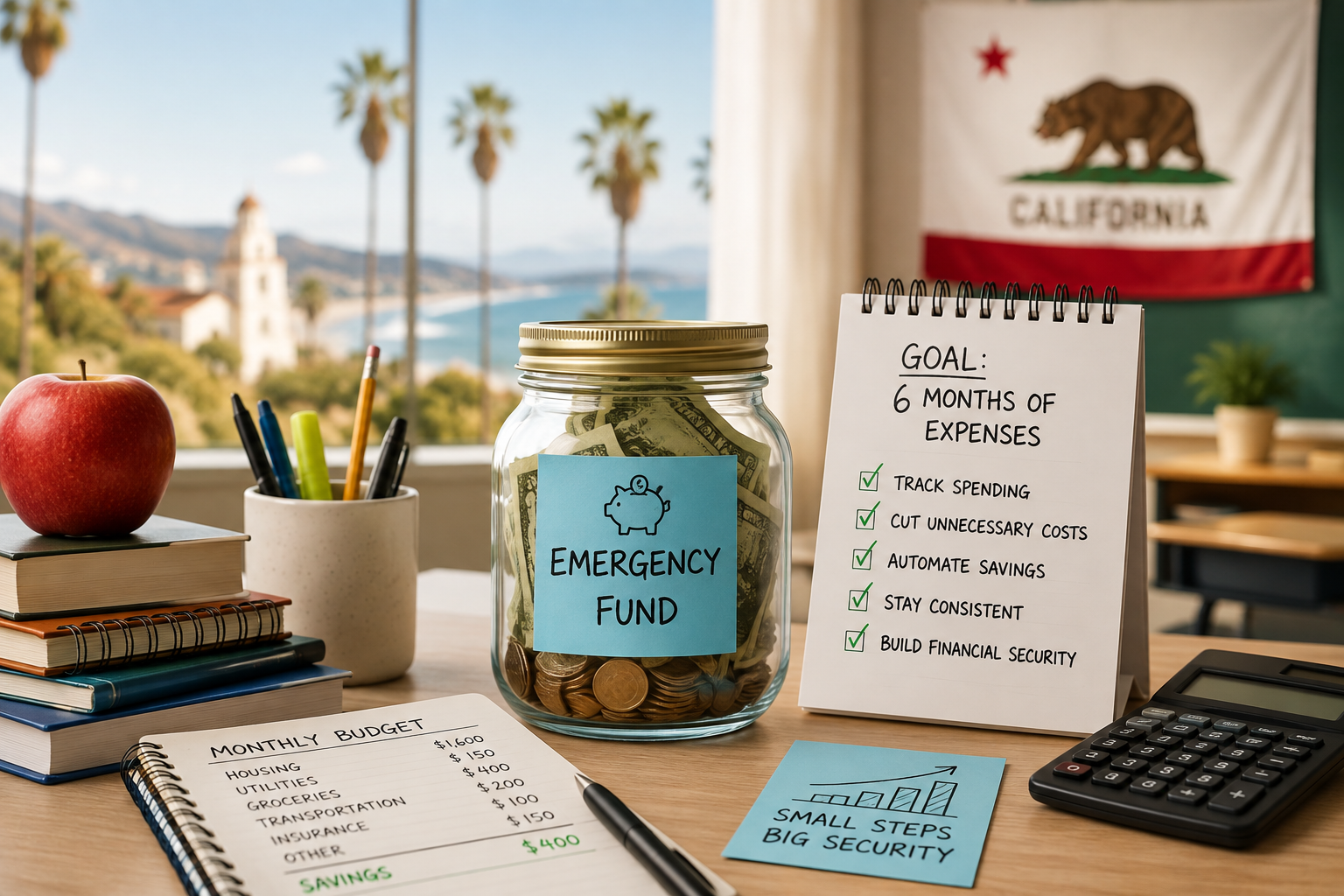
Building a six-month emergency fund can feel difficult when housing, food, insurance, transportation, family needs, and classroom expenses already compete for each paycheck. Still, an emergency fund is one of the strongest financial protections a California teacher can create.
At Peak Solutions Financial, we believe good planning begins with clarity. A cash reserve can help you manage an urgent repair, medical bill, temporary income loss, or family emergency without immediately turning to debt or disrupting long-term savings. You do not need to reach the full goal at once. A six-month fund is built one paycheck and one milestone at a time.
Why Do California Teachers Need a Six-Month Emergency Fund?
An emergency fund is money reserved for necessary, unplanned expenses. It is not a vacation account or a general spending cushion. The Consumer Financial Protection Bureau explains that emergency savings can help people recover from financial shocks, while the Federal Deposit Insurance Corporation identifies several months of living expenses as a common savings goal.
A larger reserve may be useful when one income supports the household, monthly costs are high, or replacing lost income would take time. Your fund may need to cover:
- Housing
- Groceries and basic supplies
- Utilities
- Insurance premiums
- Transportation
- Medical needs
- Minimum debt payments
- Childcare or dependent care
This safety net supports broader retirement planning because short-term stability can help protect long-term progress.
How Do You Calculate Your Six-Month Target?
Base the target on essential monthly expenses, not your gross salary. Review three to six months of statements and separate required costs from optional spending.
Which Expenses Should You Count?
Include expenses your household would still need during a financial setback:
- Rent or mortgage
- Basic utilities
- Groceries
- Insurance
- Fuel and essential transportation
- Prescriptions and medical care
- Minimum loan and credit card payments
- Required childcare
- Necessary family support
Dining out, travel, entertainment, subscriptions, gifts, and upgrades usually should not be included because they can be reduced temporarily.
Add your essential monthly costs and multiply the total by six. If essential expenses are $4,000 per month, the target is $24,000. The right number is the amount tied to your real household needs.
How Can You Make the Goal Less Overwhelming?
Build the fund in stages:
- Save a starter reserve of $500 to $1,000.
- Reach one month of essential expenses.
- Increase the balance to three months.
- Continue until you reach six months.
Each milestone matters. Even a smaller reserve may prevent a car repair or medical bill from becoming new credit card debt.
How Can You Save Consistently From a Teacher’s Paycheck?
Automatic saving is usually easier than relying on what remains at the end of the month. The FDIC recommends scheduled transfers because they allow you to save before spending.
Choose a fixed amount from each paycheck and transfer it to a separate emergency account. Start with an amount you can maintain, then increase it gradually. Your plan might include:
- $25 to $100 from every paycheck
- Part of each raise or stipend
- A portion of a tax refund
- Income from summer work or extra assignments
- Money freed after paying off a debt
Consistency matters more than starting with a large amount. Our guidance for public employees and educators focuses on coordinating income, benefits, accounts, and risks instead of treating each financial decision separately.
How Can the School-Year Pay Cycle Help?
Pay arrangements vary by district, so review your contract and payroll elections. Build a calendar that includes paycheck dates, annual bills, school-related expenses, summer income changes, stipends, and extra assignments.
Keep a small automatic contribution active throughout the year. During stronger income months, add more. When you receive temporary extra income, decide how much will go to the fund before the money reaches everyday spending.
This method allows the savings plan to match your actual cash flow rather than forcing every month to look the same.
Which Budget Changes Can Create More Room?
A sustainable plan does not require removing everything you enjoy. Start with expenses that provide meaningful savings with limited disruption.
Review unused subscriptions, delivery fees, phone and internet plans, automatic renewals, frequent convenience spending, and unplanned classroom purchases. Set a weekly limit for flexible categories and transfer any remaining amount to savings.
You can also try a three-month savings sprint. Temporarily reduce one or two optional categories and direct the difference to the emergency fund. A focused period is often easier to follow than an indefinite promise to spend less.
Where Should You Keep the Money?
Emergency savings should be safe, accessible, and separate from daily spending. Consider a dedicated savings account at an insured financial institution.
Look for deposit insurance, reasonable access, no unnecessary monthly fees, clear transfer rules, and a competitive interest rate. Avoid placing the full fund in stocks or other investments that may lose value when you need the money.
The purpose is stability, not maximum growth. Keeping the account separate from checking may also reduce casual withdrawals.
How Does an Emergency Fund Fit With CalSTRS and a 403(b)?
Emergency savings and retirement accounts serve different purposes. CalSTRS benefits and supplemental accounts support long-term retirement income. An emergency fund handles current financial shocks.
A CalSTRS pension review can help you understand your service credit, benefit projection, and payout choices. Our 403(b) planning guidance explains how a supplemental account may fit alongside a pension.
A retirement account should not automatically become your emergency fund. The Internal Revenue Service explains that early retirement distributions may be taxable and may face an additional tax unless an exception applies. Plan rules also determine whether loans or hardship distributions are available.
Accessible cash can help you avoid disturbing long-term savings. After establishing a stable reserve, review how much you can direct toward employer-sponsored accounts. You can also read our guide to 403(b) plans for California teachers.
Should You Save or Pay Off Debt First?
You may not need to choose only one goal. Start with a small emergency reserve while making required debt payments. Then direct extra money toward high-interest balances while keeping a smaller automatic savings contribution active.
After a debt is paid, move the old payment amount into the emergency fund. This lets money already included in your budget continue working toward a new goal.
The best order depends on interest rates, income stability, household responsibilities, and available coverage. This is why we consider cash reserves and debt within a complete asset protection discussion.
How Can You Maintain the Fund?
Review the target once a year and after major changes such as moving, marriage, divorce, a new child, a job change, increased debt, or retirement.
Using the fund for a real emergency is not a failure. That is its purpose. Once the situation is stable, restart automatic transfers and rebuild the balance.
A regular review can connect your reserve with retirement income planning. Our retirement planning checklist for California teachers can help you review other important areas as your career progresses.
How Can Peak Solutions Financial Help?
At Peak Solutions Financial, we help California educators understand how their pension, employer accounts, savings, protection needs, and future income fit together. We begin with education and a clear view of the full financial picture.
An emergency fund is one part of that picture, but it can protect every other part. Having accessible cash may reduce the need to increase debt, interrupt retirement savings, or make a rushed decision with a long-term account.
Our role is to help you understand your choices and build an organized plan. We coordinate with licensed tax or legal professionals when a question falls outside financial planning.
Which Organizations Support This Guidance?
California State Teachers’ Retirement System. “Take Control of Your Finances with New Resources at CalSTRS.com.” CalSTRS, 2026, www.calstrs.com/take-control-of-your-finances-with-new-resources-at-calstrs-com.
Consumer Financial Protection Bureau. “An Essential Guide to Building an Emergency Fund.” Consumer Financial Protection Bureau, 29 Oct. 2025, www.consumerfinance.gov/an-essential-guide-to-building-an-emergency-fund/.
Federal Deposit Insurance Corporation. “Saving for the Unexpected and Your Future.” Federal Deposit Insurance Corporation, 3 Jan. 2025, www.fdic.gov/consumer-resource-center/2025-01/saving-unexpected-and-your-future.
Internal Revenue Service. “Hardships, Early Withdrawals and Loans.” Internal Revenue Service, 26 Feb. 2026, www.irs.gov/retirement-plans/hardships-early-withdrawals-and-loans.
This content is for general informational purposes and does not constitute tax, legal, or investment advice. Peak Solutions Financial is not affiliated with CalSTRS or any government agency.