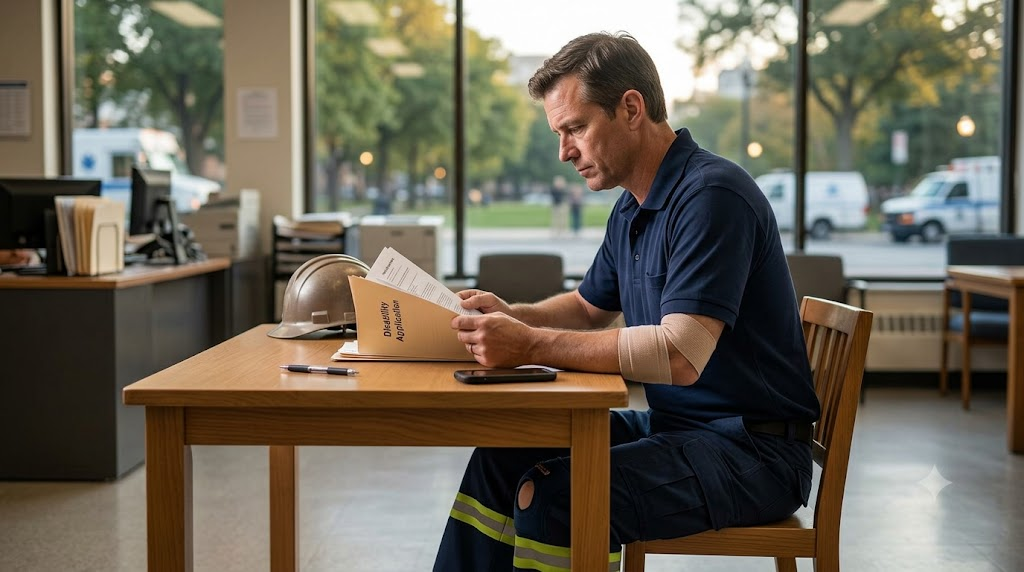
CalPERS industrial disability retirement can be an important benefit for eligible public employees who can no longer perform their usual job duties because of a job-related injury or illness. For someone who has served in a public role, an injury at work can create more than physical pain. It can raise serious questions about income, health benefits, taxes, family protection, and long-term retirement planning.
The first thing to understand is that a work injury alone does not automatically qualify every CalPERS member for industrial disability retirement. Eligibility depends on your membership category, your employer’s agreement with CalPERS, the medical evidence, and whether the injury or illness is considered job-related under CalPERS rules.
For public employees who are trying to understand their options, Peak Solutions Financial helps bring clarity to complex retirement decisions. The firm focuses on retirement planning for educators and public employees, including CalPERS pension reviews, retirement income planning, service credit review, payout option comparisons, health-related financial protection planning, and long-term income continuity strategies.
What Is CalPERS Industrial Disability Retirement?
CalPERS industrial disability retirement is a lifetime monthly benefit for eligible members who become unable to perform their usual job duties because of a job-related injury or illness. The benefit may continue for life, or until the member recovers from the disabling injury or illness.
This is different from regular disability retirement. Regular disability retirement can apply when the injury or illness does not have to be job-related. Industrial disability retirement is specifically tied to a job-related injury or illness.
This distinction matters because the eligibility rules, benefit treatment, and tax reporting may be different. CalPERS states that industrial disability retirement has no minimum age requirement and no minimum service credit requirement, but the member must qualify under the right membership category and the disability must be job-related (California Public Employees’ Retirement System, “Service & Disability Retirement”).
Who May Qualify for CalPERS Industrial Disability Retirement?
The answer depends on the member’s CalPERS classification. Some safety members may be eligible if the disability is job-related. Certain state and local safety categories may qualify. Some school safety members may qualify if the disability is work-related. Local miscellaneous members may qualify only if the employer’s agreement with CalPERS provides the industrial disability retirement benefit.
This is where many public employees get confused. A person may be a CalPERS member and may have a legitimate work injury, but that does not always mean industrial disability retirement is available. For example, CalPERS explains that many state miscellaneous and school members are not eligible for industrial disability retirement, although they may qualify for regular disability retirement if they are determined to be disabled.
Because every situation depends on classification, employer agreement, service history, and benefit formula, it is wise to review your CalPERS records carefully. The CalPERS pension review services from Peak Solutions Financial can help public employees understand how pension rules, service credits, retirement options, and income planning connect before they make major retirement decisions.
What Does CalPERS Mean by Being Unable to Perform Usual Job Duties?
CalPERS does not approve disability retirement simply because a person has pain, limitations, or difficulty at work. The question is whether the member is substantially incapacitated from performing the usual duties of the current position.
In simple terms, CalPERS looks at whether the member can perform the essential functions of the actual job. It is not enough to show that the job is harder than before. The medical condition must create a substantial inability to perform the usual and customary duties of the position. The condition must be expected to last at least 12 consecutive months or result in death (California Public Employees’ Retirement System, “Disability Retirement Resources for Local Safety Agencies”).
This is why documentation matters. A strong application usually needs:
- Clear medical records
- A description of the injury or illness
- A connection between the condition and job duties
- A job duty statement or physical requirements information
- Medical opinions that explain why the employee cannot perform the usual role
- Employer and CalPERS forms completed accurately
A financial planning review does not replace medical, legal, or tax advice. However, it can help you understand what a disability or industrial disability retirement decision may mean for your income plan, family protection, and future retirement choices.
How Does the CalPERS Industrial Disability Retirement Application Process Work?
A member, employer, power of attorney, or another authorized person may start the application process. CalPERS says a member does not need to wait until a workers’ compensation claim is settled or until the condition is considered permanent and stationary before applying.
After the application is submitted, CalPERS sends an acknowledgment letter. Once CalPERS receives the required documentation and forms, the review process begins. CalPERS may request more information or an independent medical examination if the file is incomplete or unclear. CalPERS states that it can generally review a disability or industrial disability retirement application within about three months after receiving all required information, although the process can take longer when more information is needed (California Public Employees’ Retirement System, “Service & Disability Retirement”).
If approved, the member is retired and usually begins receiving monthly benefit payments within four to six weeks. If denied, the next steps may depend on the type of member, the employer’s role, and the reason for denial.
Before filing, CalPERS recommends requesting a retirement allowance estimate. This matters because some members may already be eligible for a service retirement benefit that is equal to or greater than the disability benefit. A careful comparison helps prevent rushed decisions.
For additional planning context, employees can also review related Peak Solutions Financial resources, including how to read a CalPERS Annual Member Statement, CalPERS Classic vs. PEPRA tiers, and CalPERS 2 at 55 vs. 2 at 62 retirement formulas.
How Is a CalPERS Industrial Disability Retirement Benefit Calculated?
Benefit calculations can vary by membership category, employer agreement, retirement formula, age, service credit, and other factors. CalPERS explains that certain safety members who retire for industrial disability on or after January 1, 2013 may receive the greater of several calculations, including 50 percent of the highest consecutive 12-month or 36-month average monthly salary, a service retirement allowance if qualified, or another formula-based amount depending on the member’s situation (California Public Employees’ Retirement System, “A Guide to Completing Your CalPERS Disability Retirement Election Application”).
This is one reason a benefit estimate is so important. If you are already service retirement eligible, industrial disability retirement may not always produce a higher monthly benefit. The financial impact depends on the member’s exact formula and record.
A complete review should look at:
- Your CalPERS membership classification
- Your benefit formula
- Your service credit
- Your final compensation
- Whether you qualify for service retirement
- Whether unused sick leave, purchased service credit, or missing service credit affects your record
- How your income needs may change after leaving work
Peak Solutions Financial focuses on helping public employees understand these moving parts through pension analysis and personalized retirement income planning. Their resource on purchasing CalPERS service credit may also be useful for members reviewing whether their service record is complete.
How Can Industrial Disability Retirement Affect Taxes and Health Benefits?
Tax treatment can be one of the most misunderstood parts of disability retirement. CalPERS explains that non-industrial disability retirement is reported as ordinary income. CalPERS also states that the only type of pension it reports to tax authorities as tax exempt is the industrial disability retirement allowance, which applies only to safety category employees where the job itself requires risk to personal safety (California Public Employees’ Retirement System, “A Guide to Completing Your CalPERS Disability Retirement Election Application”).
Even with that guidance, tax treatment can depend on your facts. You should work with a qualified tax professional before making decisions based on expected tax results. Peak Solutions Financial notes that its retirement planning services include helping clients understand how pensions and retirement income are taxed, strategies to improve tax efficiency, required minimum distribution considerations, and coordination with licensed tax professionals.
Health benefits also need attention. CalPERS explains that a member’s health coverage may lapse during disability retirement processing if premiums are not handled correctly. Members should contact the employer about direct payment options if needed, then review re-enrollment once the retirement is approved (California Public Employees’ Retirement System, “Injury/Disability”).
For more guidance on retirement coverage topics, review CalPERS health benefits in retirement.
Why Should Public Employees Plan Before and After an Industrial Disability Retirement Decision?
An industrial disability retirement decision is not only a benefit application. It can change the structure of your financial life. Your paycheck may stop. Your retirement allowance may begin. Your health coverage may need attention. Your family may need updated beneficiary planning. Your tax picture may change. Your long-term income plan may need to be rebuilt.
That is why public employees should not look at the monthly benefit alone. A better planning approach asks:
- Will this income cover household expenses?
- How will health-related costs be handled?
- What happens to a spouse or dependent if the member dies?
- Are beneficiary records updated?
- Are service credits accurate?
- Are there missing or incomplete service years?
- Is there a plan for taxes, reserves, and long-term income continuity?
- Does the member need help coordinating with tax or estate professionals?
Peak Solutions Financial was built to help educators and public employees gain clarity around these decisions. The firm’s About page explains that it serves educators, administrators, and public employees who want to understand retirement options and protect the people they care about.
How Can Peak Solutions Financial Help Public Employees Understand Their Retirement Options?
Peak Solutions Financial does not replace CalPERS, your employer, your physician, your tax professional, or legal counsel. Instead, its role is to help you understand your retirement income picture and make more informed planning decisions.
Their services may help public employees review:
- CalPERS pension details
- Service credit history
- Retirement income options
- Payout option comparisons
- Spousal and dependent income protection strategies
- Health-related financial protection planning
- Beneficiary planning
- Tax coordination with licensed professionals
- Long-term income continuity strategies
If you are injured on the job and unsure how a CalPERS industrial disability retirement may affect your future, a retirement planning conversation can help you organize the financial side of the decision. You can start through the Peak Solutions Financial contact page or review more educational posts in their retirement planning blog.
What Organizations Were Cited?
California Public Employees’ Retirement System. “A Guide to Completing Your CalPERS Disability Retirement Election Application.” CalPERS, 2025.
California Public Employees’ Retirement System. “Disability Retirement Resources for Local Safety Agencies.” CalPERS, 23 July 2024.
California Public Employees’ Retirement System. “Injury/Disability.” CalPERS, 5 Jan. 2026.
California Public Employees’ Retirement System. “Service & Disability Retirement.” CalPERS, 24 Mar. 2026.
Internal Revenue Service. “Publication 525: Taxable and Nontaxable Income.” Internal Revenue Service, 2025.